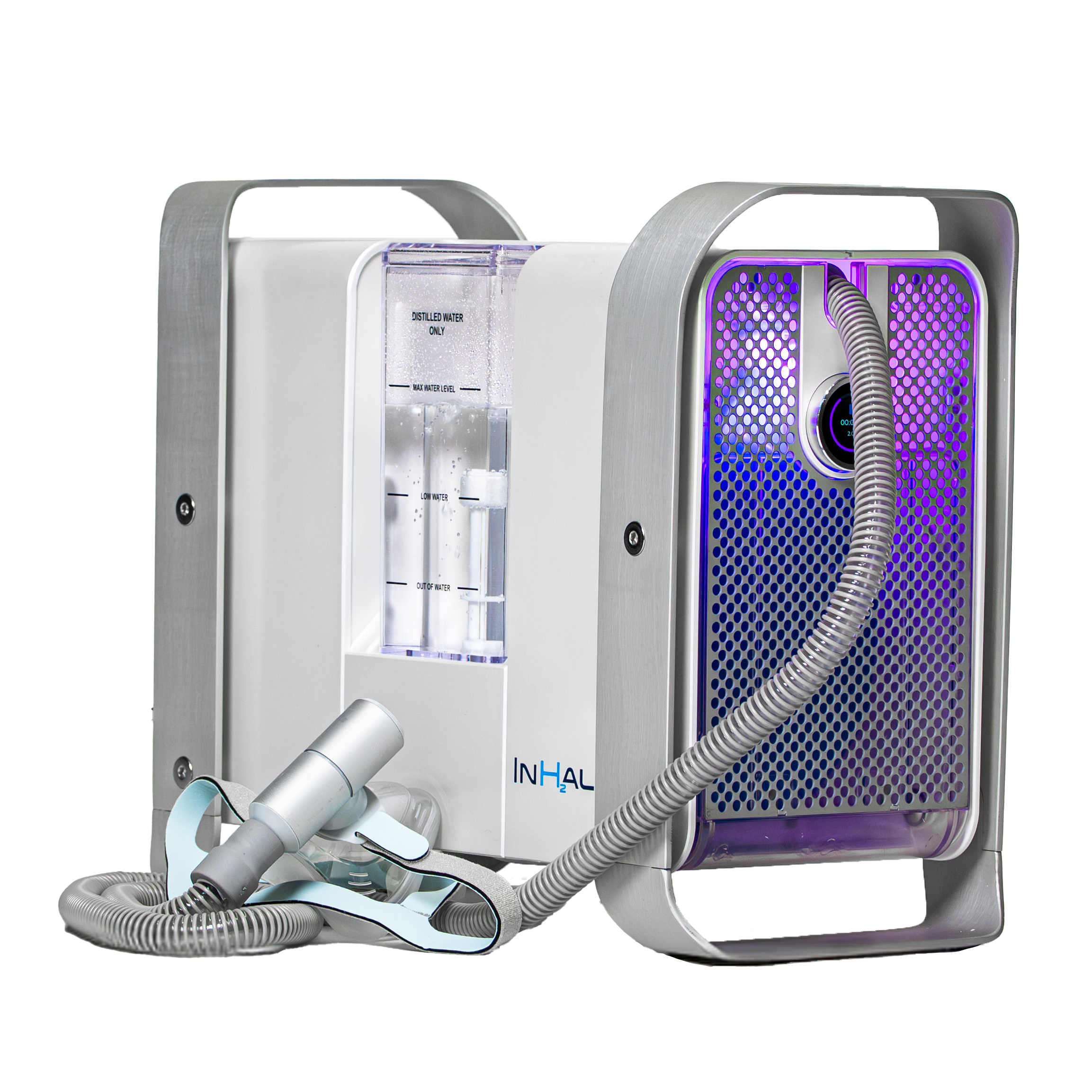
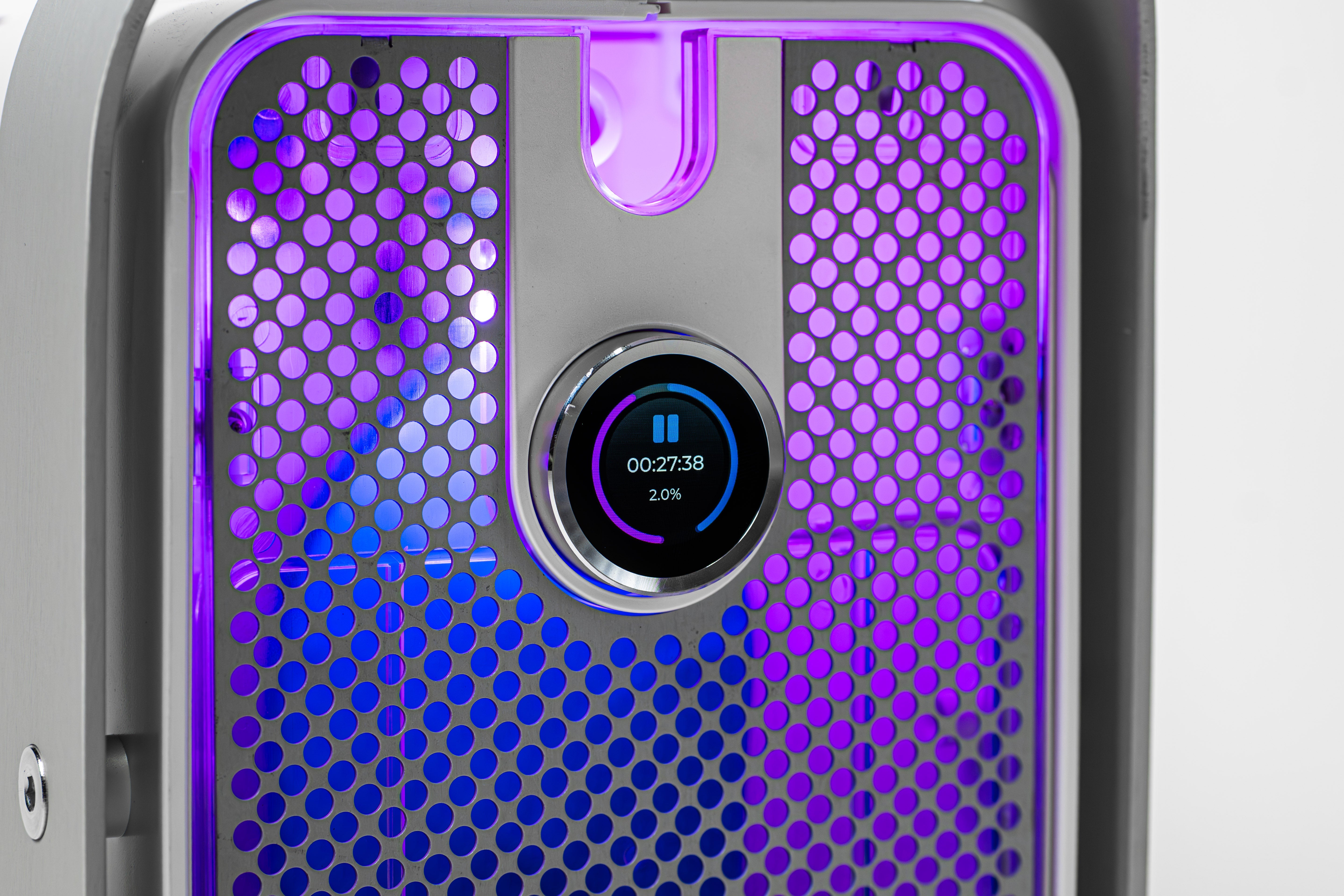
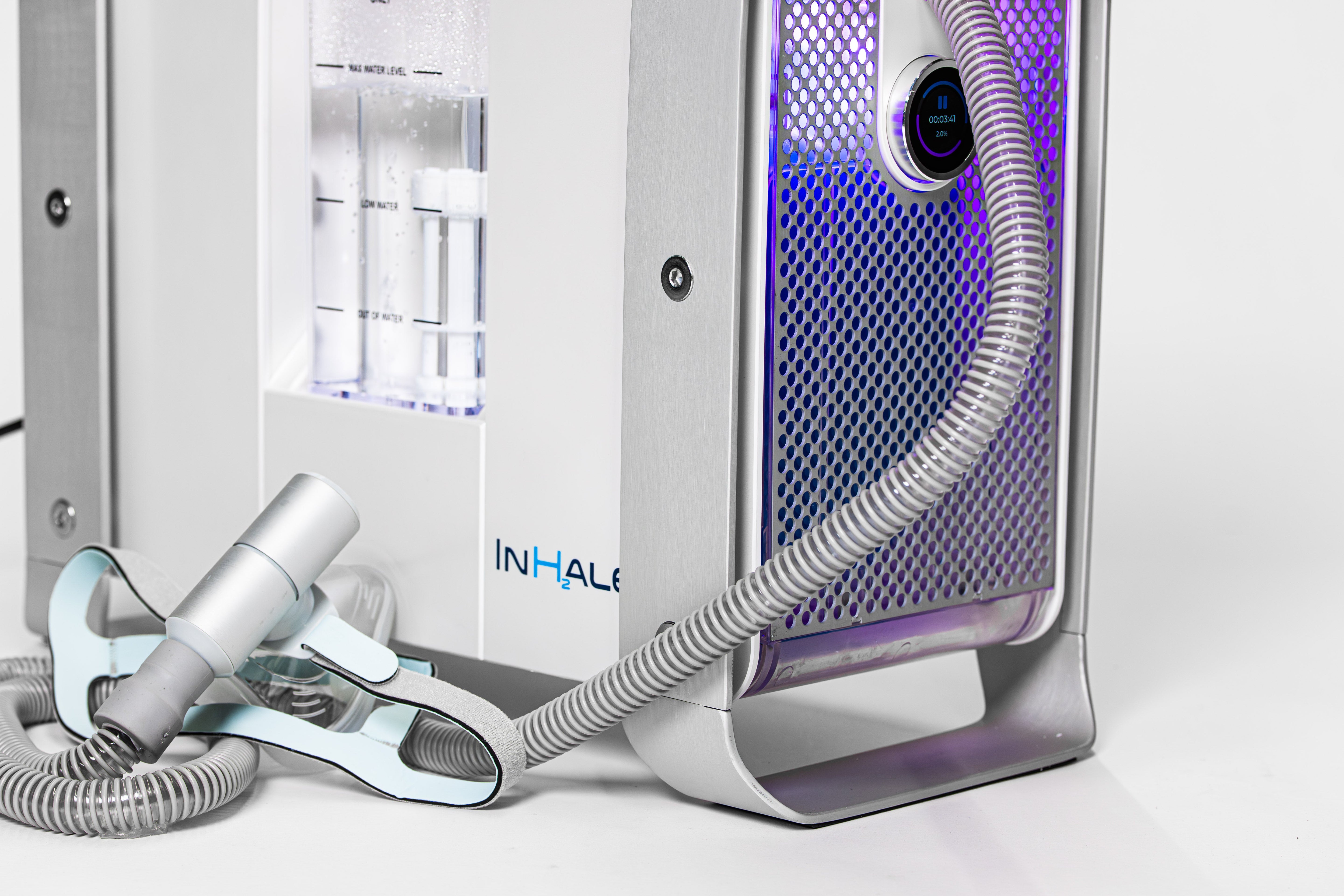
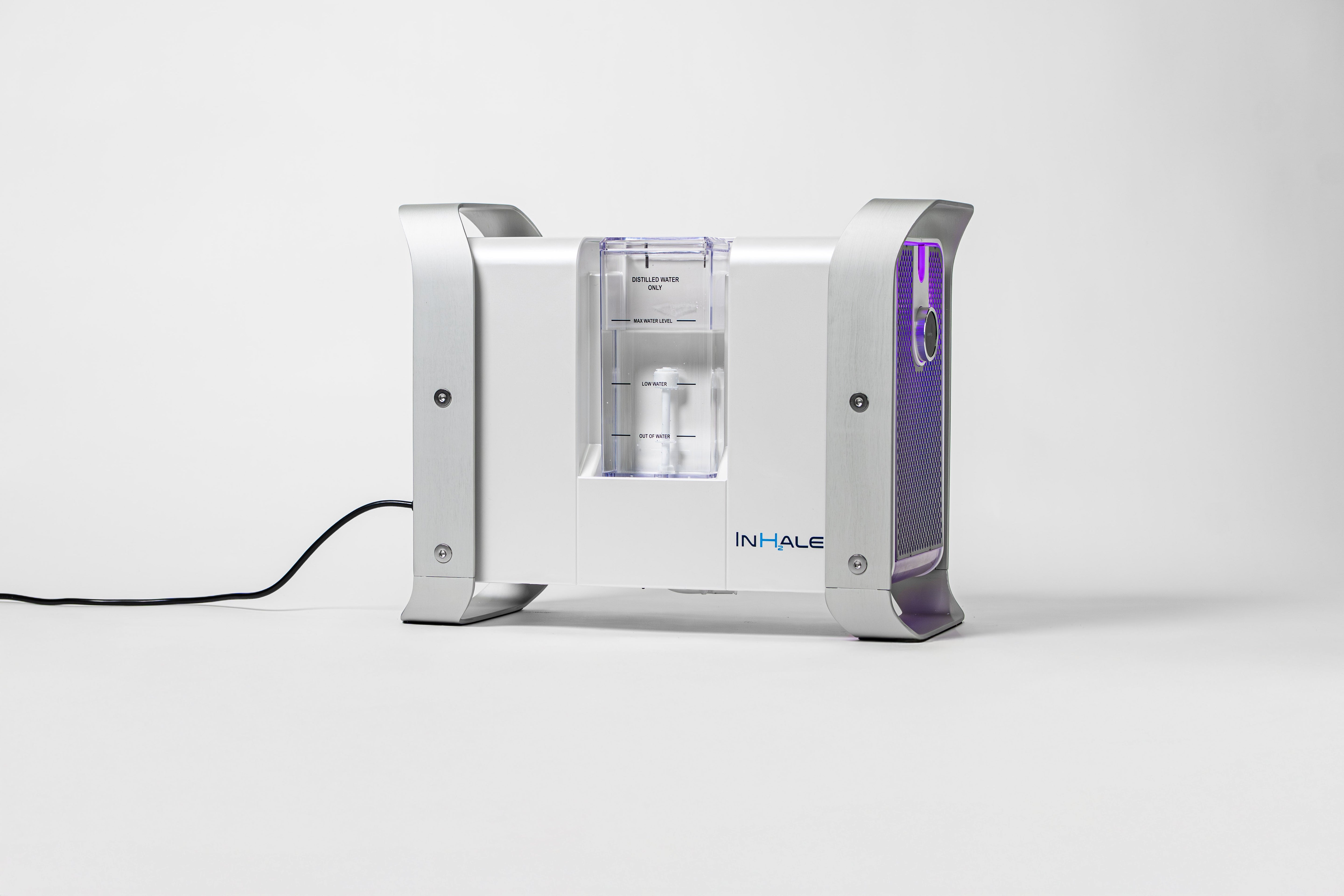
What makes the InhaleH2 unit different?
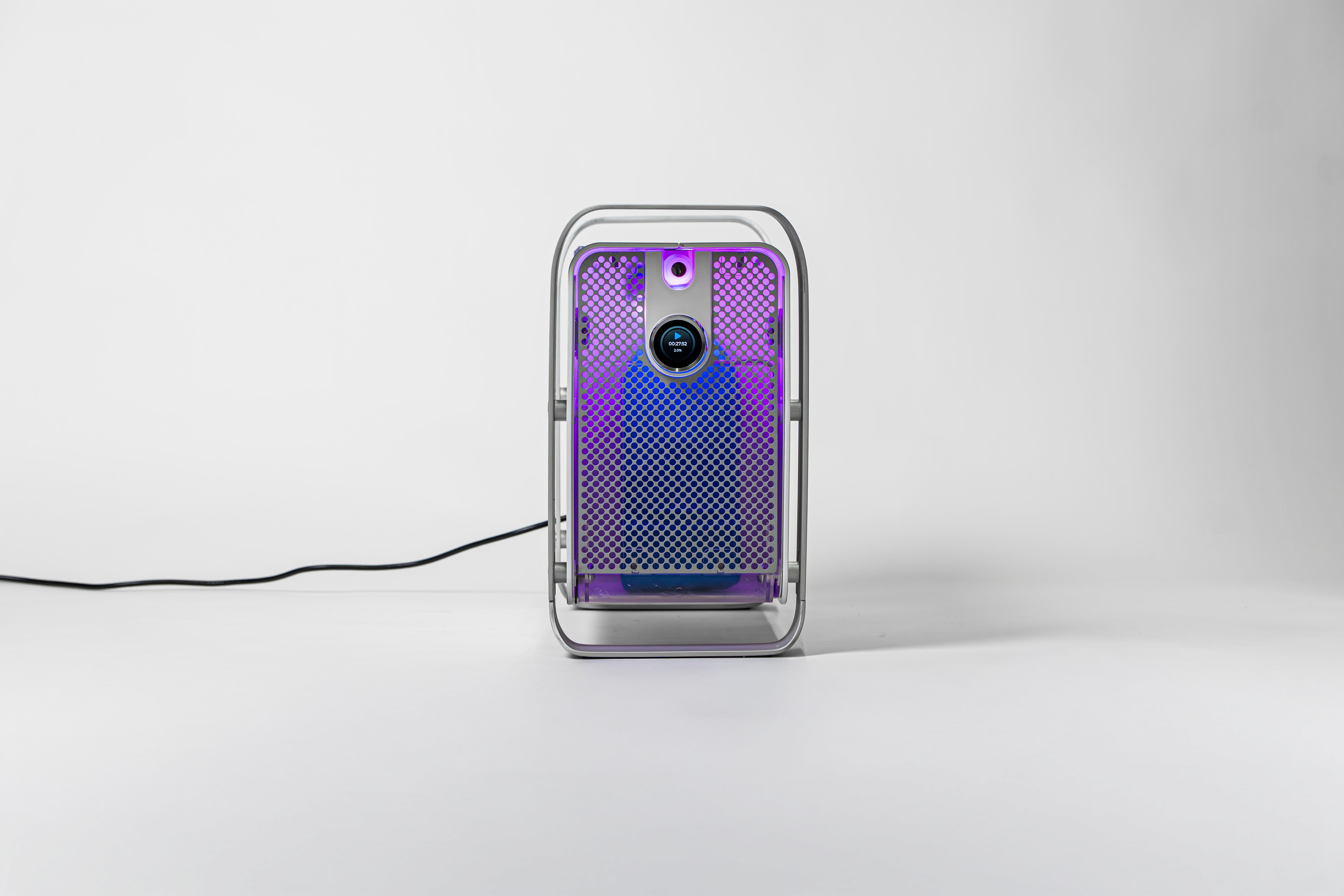
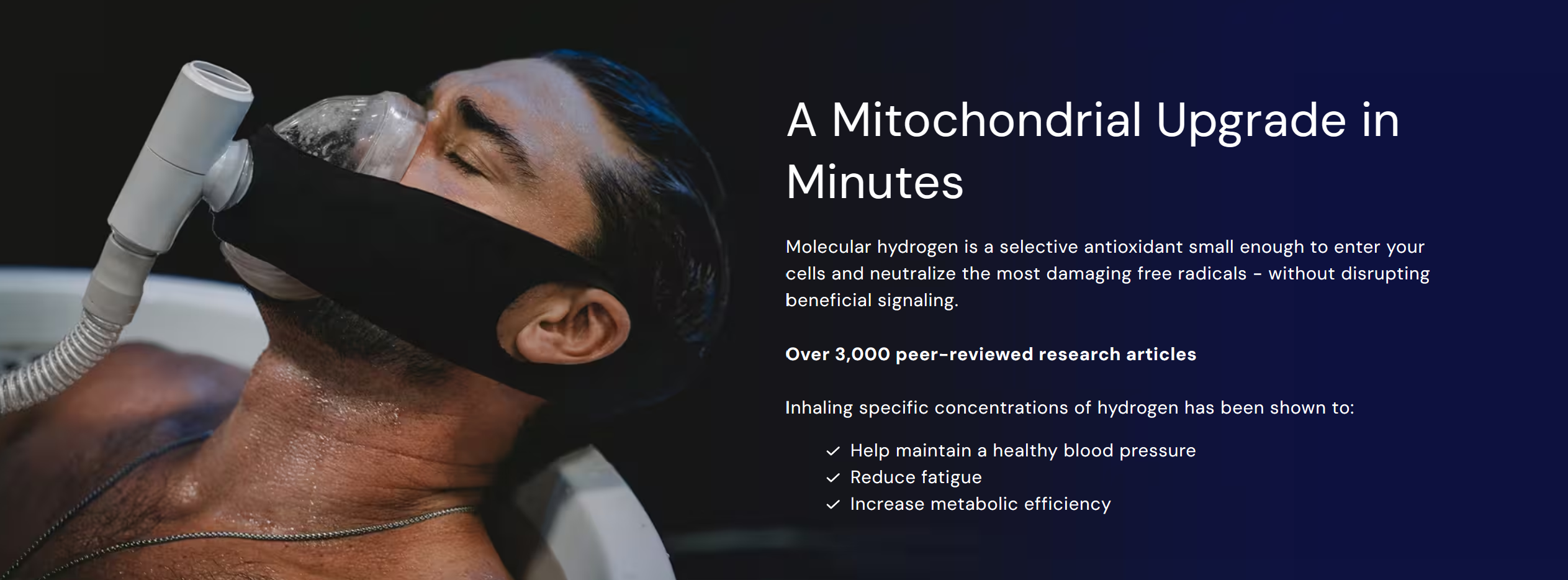
The InhaleH2 unit delivers a precise hydrogen concentration (0.1–4.0%) with every breath, staying below the flammability threshold while delivering high flow (≈12 L/min). This makes inhalation safe, comfortable, and effective.
How is hydrogen produced in the machine?
The device uses advanced PEM electrolysis to split water into hydrogen and oxygen.
What materials are used in the machine?
Critical components — including the PEM plates — are made from titanium alloy for durability and corrosion resistance.
Where is the unit designed and manufactured?
It is engineered in the U.S. in collaboration with Alex Tarnava and Dr. Tyler LeBaron, and assembled in China.
Does the unit have certifications?
Manufacturing follows CE requirements. Additional certifications are being pursued.
How do I set up the machine?
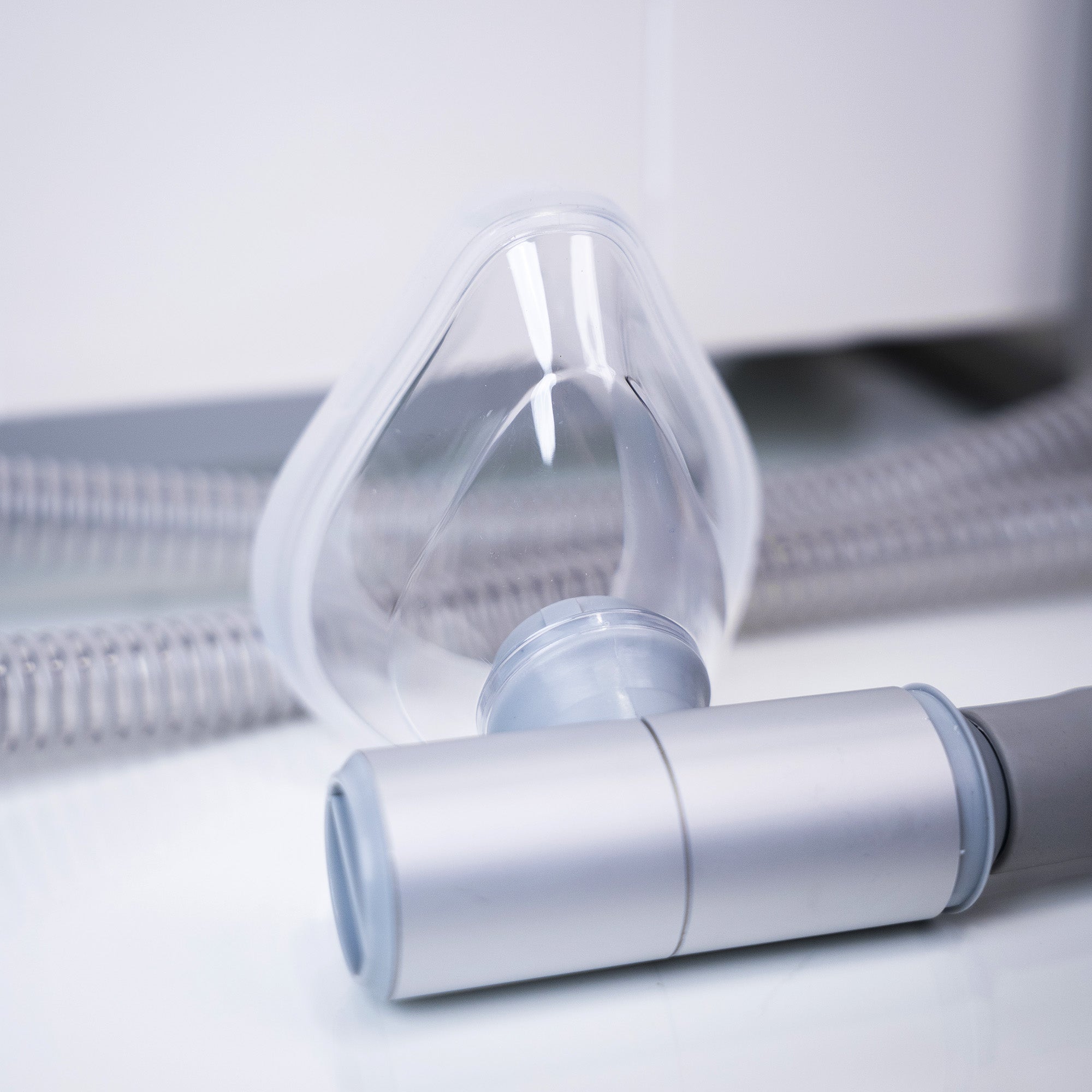
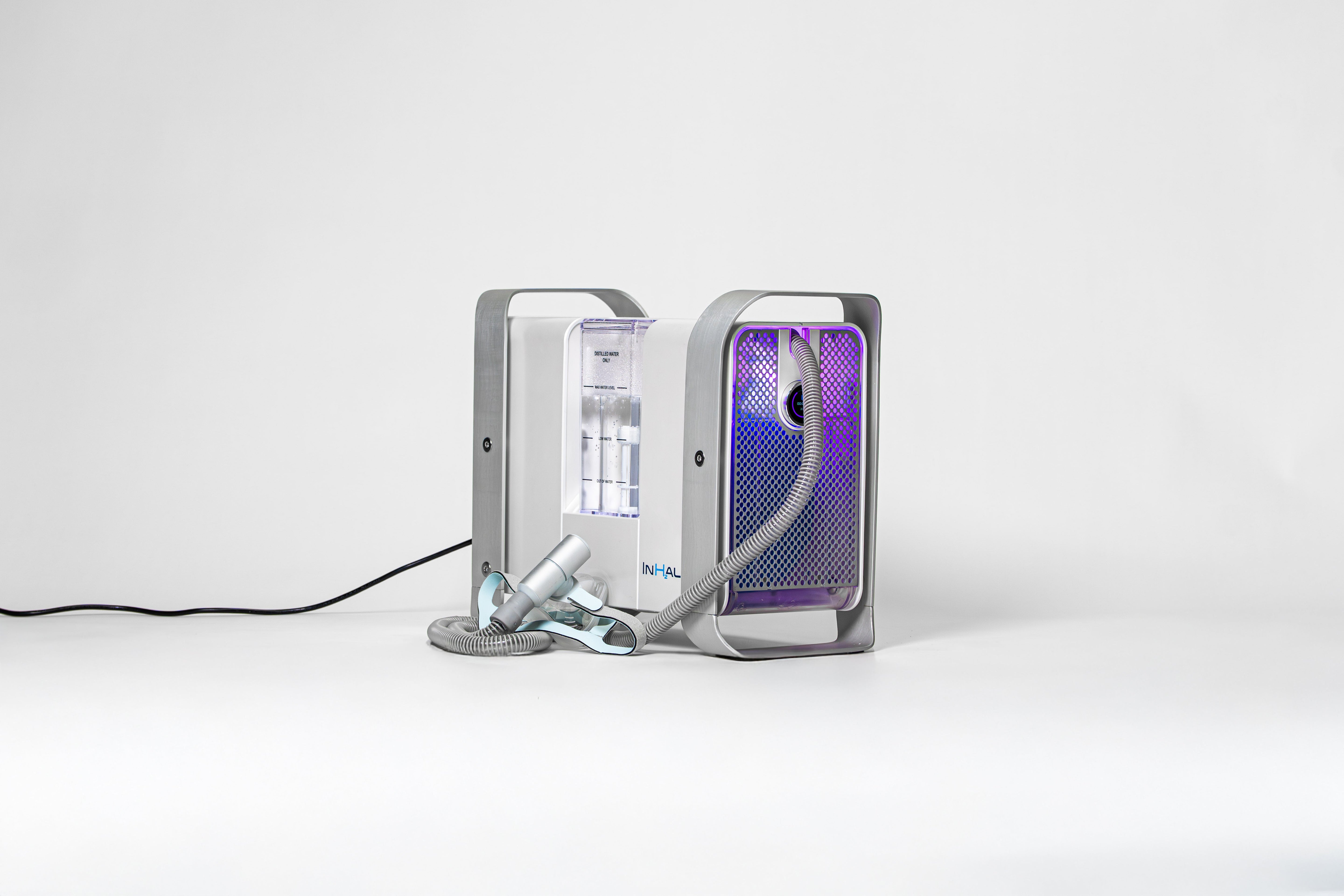
Setup is simple: fill with distilled water, attach the breathing bag and mask, plug in, power on, choose your settings, and press PLAY. Detailed steps are in the Quick Start Guide of the User Manual here. Videos are also available here.
What water should I use?
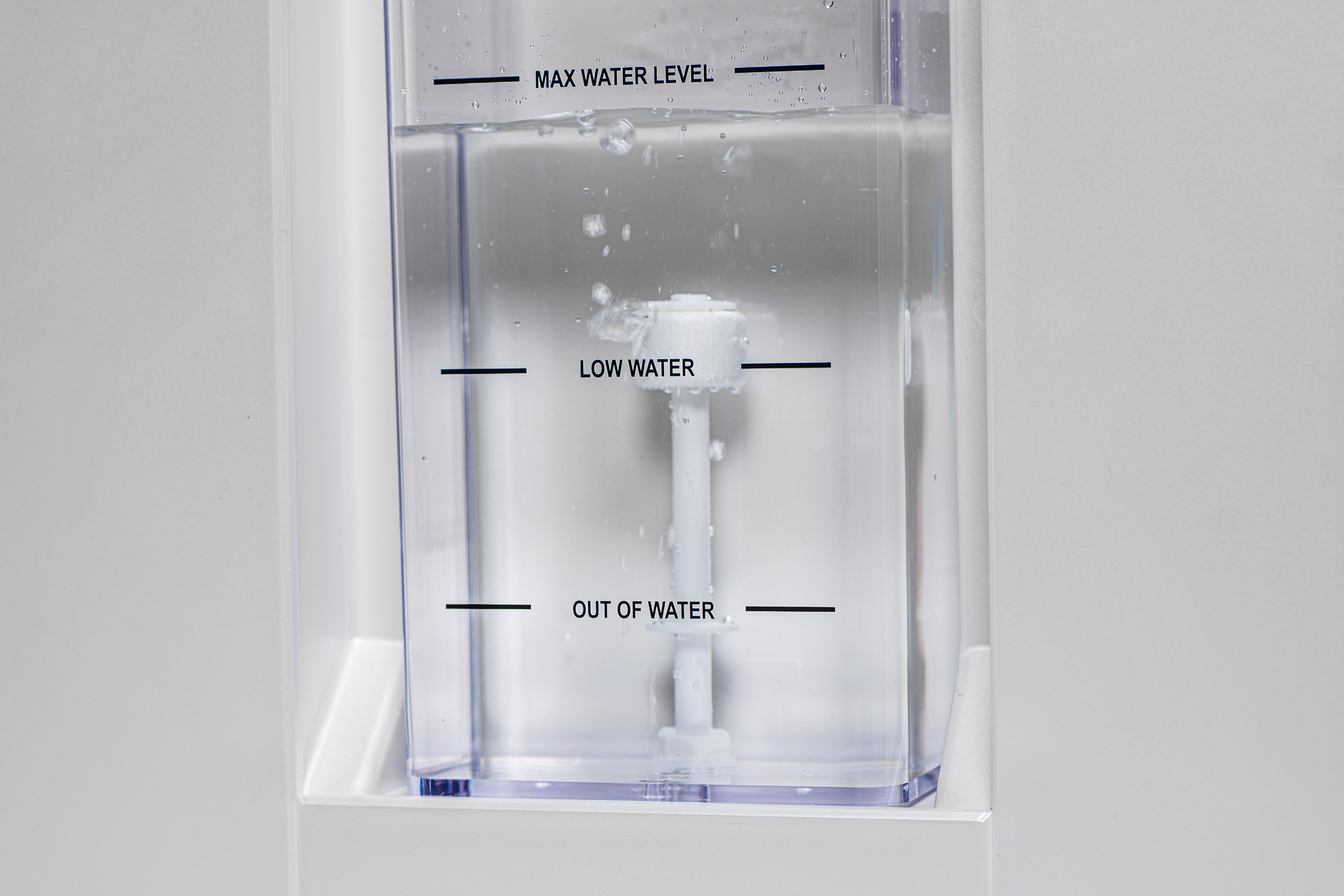
Distilled water only. All other water types (including RO, filtered, bottled, tap) may affect performance and void the warranty.
How long is a typical session?
Most users choose 20 minutes to 3 hours. Daily use is common. The machine can run 24 hours, but continual operation is not recommended.
Does a nasal cannula work?
Yes — but only high-flow cannulas. Standard cannulas do not supply enough flow and will not work properly. A high-flow cannula option is coming soon.
Can I combine hydrogen with HBOT, ozone therapy, or PEMF?
Yes. Hydrogen may complement HBOT by reducing oxidative stress when HBOT exceeds the optimal hormetic range. There is no conflict with ozone or PEMF.
How often should I replace the HEPA filter?
Every 6 months or sooner if visibly dirty. Replacement requires removing two screws on the back panel.
How often should I empty or refresh the water?
Drain and replace distilled water every 30–60 days.