What is red light therapy (RLT)?
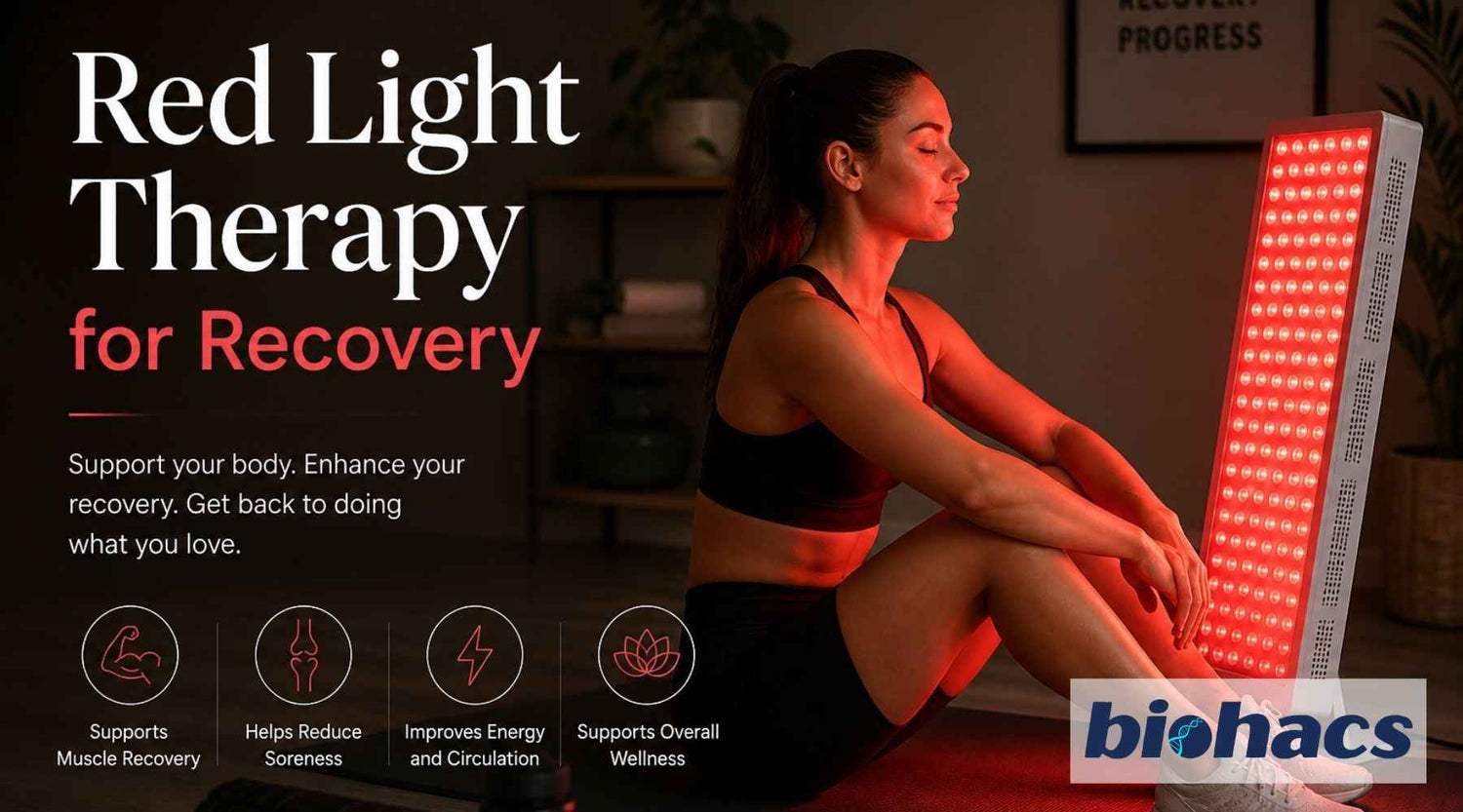
Red light therapy—also known as photobiomodulation (PBM)—uses specific wavelengths of red and near-infrared light (typically ~600–900 nm) to stimulate biological processes in your cells. It’s non-invasive, non-thermal, and works by interacting with mitochondria (your cells’ energy producers).
The core science (why it works)
At the cellular level, RLT primarily targets mitochondria:
- Light photons are absorbed by enzymes like cytochrome c oxidase
- This increases ATP (cellular energy) production
- Improves cell signalling, repair, and regeneration
- Enhances blood flow and oxygen utilisation
This cascade leads to:
- Reduced oxidative stress
- Modulated inflammation
- Faster tissue repair
These mechanisms are consistently described across clinical and lab studies.
1. Sports recovery & performance
Key benefits
- ↓ Muscle damage markers (e.g., creatine kinase)
- ↓ Delayed onset muscle soreness (DOMS)
- ↑ Muscle endurance and performance
- ↑ Faster recovery between sessions
Evidence
- Reviews of clinical trials show reduced muscle damage and soreness in multiple studies, though not all results are consistent.
- Larger reviews (46 studies, >1000 participants) found improved fatigue resistance and faster recovery.
- A randomised trial in rugby players showed improved performance and accelerated recovery with PBM.
Takeaway: Strong evidence supports RLT as a recovery enhancer, with more mixed evidence for direct performance boosts.
2. Inflammation & pain reduction

How it helps
- Reduces pro-inflammatory cytokines
- Improves circulation and lymphatic flow
- Lowers oxidative stress
Evidence
- Studies show PBM can modulate inflammation and reduce muscle damage biomarkers.
- Meta-analyses in injured athletes show reduced pain and improved return-to-play outcomes.
This is one of the most consistently supported benefits.
3. Skin rejuvenation & anti-ageing
Key effects
- ↑ Collagen and elastin production
- ↓ Fine lines and wrinkles
- Improved skin tone and texture
Evidence
- RLT stimulates fibroblasts (collagen-producing cells) via mitochondrial activation.
- Clinical observations show improvements in wrinkles, roughness, and skin density.
This is why RLT is widely used in dermatology and aesthetics.
4. Overall health & systemic benefits
Potential broader effects
- Improved circulation and oxygen delivery
- Enhanced wound healing and tissue repair
- Possible benefits for sleep, mood, and brain function
Evidence
- PBM improves oxygen saturation and cellular metabolism in blood cells.
- Some studies suggest benefits for sleep and cognitive function, though evidence is still emerging.
These benefits are promising—but less established than recovery and skin effects.
5. Long-term wellness & ageing
Why it may support longevity
- Reduces chronic inflammation (a driver of ageing)
- Supports mitochondrial health (key to energy and ageing)
- Enhances recovery capacity → allows consistent training
Evidence summary
- PBM reduces oxidative stress and inflammation markers linked to ageing.
- Helps maintain muscle function and recovery capacity over time.
Think of RLT as a compounding tool—benefits build with consistent use.
What the science says overall
Strong evidence for:
- Muscle recovery
- Inflammation reduction
- Pain relief
- Skin rejuvenation
Moderate / emerging evidence for:
- Performance enhancement
- Cognitive and systemic health
- Long-term anti-ageing effects
Limitations
-
Results depend heavily on:
- Dose (wavelength, intensity, duration)
- Consistency of use
- Some studies show mixed or null results, especially for performance metrics
Bottom line
Red light therapy is not hype—but it’s not magic either.
- It works by improving cellular energy and reducing inflammation
- The strongest use case is recovery and injury management
- Benefits are gradual, cumulative, and dose-dependent
If you’re thinking like an athlete or longevity-focused user:
It’s best viewed as a recovery multiplier, not a shortcut.
(This post has been formulated using AI and is intended as an informative overview only. Please therefore conduct your own research before relying on any of it's validity).