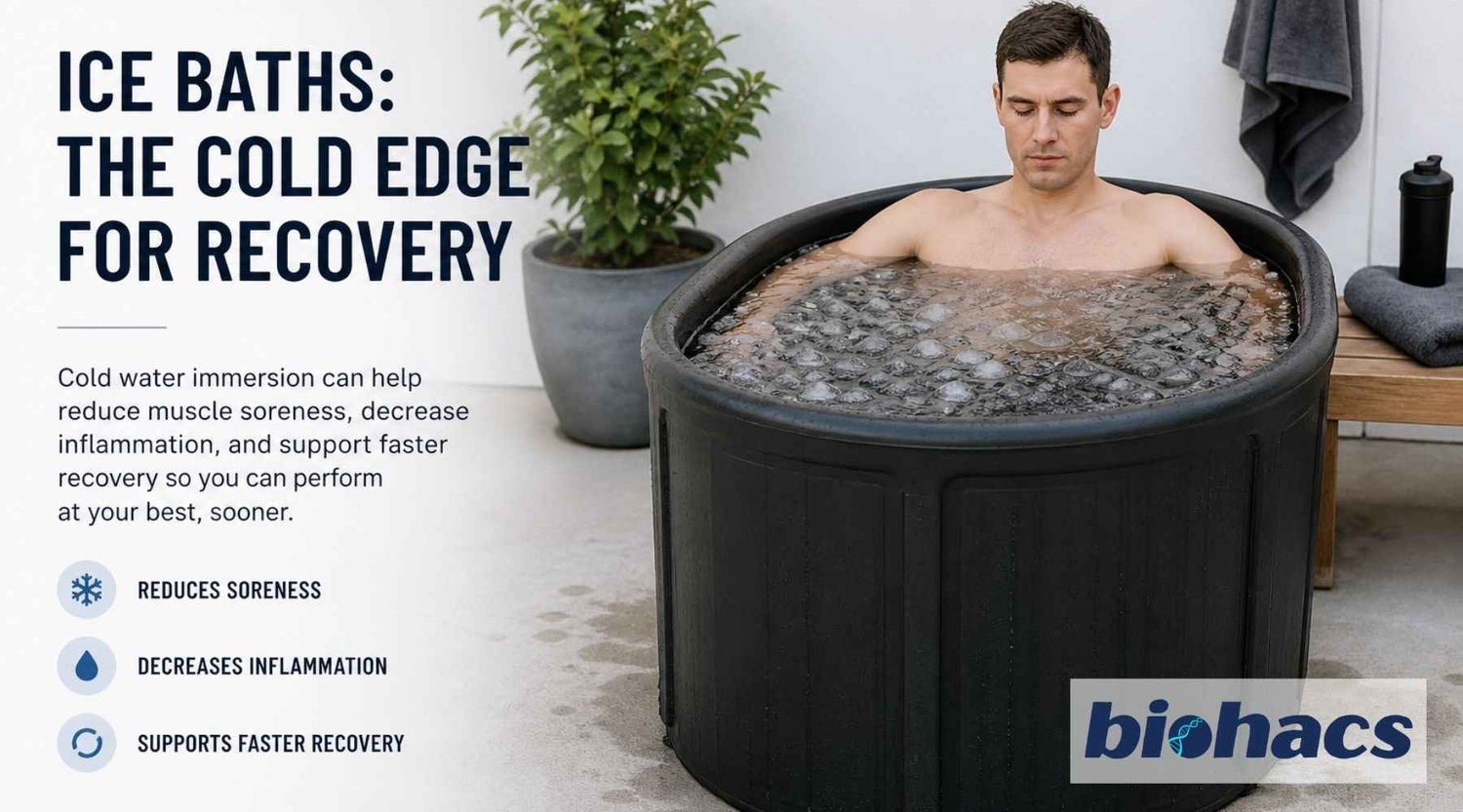
Ice baths (cold water immersion, typically ~10–15°C) are widely used in sport and wellness—but the real story is nuanced. Some benefits are well-supported (especially for short-term recovery), while others are still emerging or overstated. Here’s a clear, science-backed breakdown across recovery, inflammation, rejuvenation, and long-term health.
🧊 1. Sports Recovery & Muscle Soreness

✅ What the science supports
-
Reduced delayed onset muscle soreness (DOMS)
Studies consistently show athletes feel less sore 24–72 hours after intense exercise when using cold water immersion. -
Faster perceived recovery
Improvements in strength, power, and flexibility recovery have been observed after hard sessions.
🧬 Mechanism
- Cold causes vasoconstriction (narrowing of blood vessels)
- This reduces swelling and tissue damage
- When you warm up again, blood flow increases (“rebound effect”), helping clear metabolic waste
⚠️ Important nuance
- Regular use may blunt muscle growth and adaptation after strength training
- Reduced inflammation can interfere with the body’s natural repair signalling
👉 Bottom line:
Great for tournaments, endurance events, or back-to-back sessions—but not ideal after every strength workout if hypertrophy is your goal.
🔥 2. Inflammation & Pain Reduction

✅ Evidence-based effects
- Reduces acute inflammation and swelling
- Decreases pain perception (via slower nerve conduction)
- Commonly used in acute injury protocols (historically part of RICE)
🧬 Mechanism
- Lower tissue temperature → reduced cellular metabolism
- Reduced inflammatory signalling and fluid accumulation
- Slower nerve signals = less pain
⚠️ Trade-off
- Inflammation is part of healing
- Chronic suppression may delay tissue repair
👉 Bottom line:
Useful for short-term inflammation control, but not something to suppress continuously.
⚡ 3. Nervous System, Mood & “Rejuvenation”
🧠 Emerging benefits
- Increased alertness and energy
- Reduced fatigue and stress perception
- Possible mood elevation
🧬 Mechanism
-
Cold shock triggers:
- Noradrenaline (norepinephrine) release
- Endorphins (feel-good chemicals)
- Activates the sympathetic nervous system, followed by parasympathetic rebound
Some small studies show improved attention, reduced anxiety, and increased alertness after cold exposure.
👉 Bottom line:
This is where many users report the biggest subjective benefit—mental reset and resilience—but large-scale evidence is still developing.
❤️ 4. Circulation, Metabolism & General Health


Potential benefits (moderate evidence)
- Improved circulation dynamics (vasoconstriction → vasodilation cycles)
- Possible stimulation of brown fat activity (linked to metabolic health, mainly animal data)
- May support energy levels and resilience to stress
Immune system?
- One large study found fewer sick days in people taking cold showers
- But mechanism remains unclear
👉 Bottom line:
There are promising signals, but not enough strong human evidence yet for major metabolic or immune claims.
🧬 5. Long-Term Wellness & Longevity

What we know
-
Regular cold exposure may act as a “hormetic stressor”
(small stress → stronger adaptation over time) -
Associated with:
- Better stress tolerance
- Potential improvements in mood and wellbeing
- Increased resilience
What’s uncertain
-
No strong evidence yet for:
- Longevity extension
- Major disease prevention
- Significant body composition changes in humans
Systematic reviews conclude:
- Benefits exist, but are modest and inconsistent across studies
👉 Bottom line:
Cold exposure may be a useful lifestyle tool, but it’s not a magic bullet for long-term health.
⚖️ Balanced Verdict (What Ice Baths Actually Do)
Strong evidence ✅
- Reduce muscle soreness
- Help short-term recovery
- Decrease pain and swelling
Moderate / emerging evidence ⚠️
- Mood, alertness, stress resilience
- Circulation and metabolic effects
Weak or mixed evidence ❌
- Immune system enhancement
- Long-term performance gains
- Longevity or disease prevention
🧠 Practical Takeaways
-
Best use case:
After intense training blocks, competitions, or when soreness is limiting performance -
Avoid overuse if your goal is:
Muscle growth and long-term adaptation -
Typical protocol:
- 5–10 minutes
- 10–15°C water
- Post-exercise or on recovery days
-
Most important reality check:
Ice baths are supplemental—sleep, nutrition, and training design have a far bigger impact.
(This post has been formulated using AI and is intended as an informative overview only. Please therefore conduct your own research before relying on any of it's validity).